Showing posts with label places. Show all posts

Thursday, September 9, 2010

Lucerne, Switzerland ****


Lucerne is a tourist favorite partly because it embodies the storybook image of a Swiss town. Located at the north end of the lake, the city abounds in narrow cobblestone streets, slender spires and turrets, covered bridges, frescoed houses, and fountains. Its residents are quick to tell you that you're "never very far from the snow" -- Mounts Rigi and Pilatus form the southern gate to the city, and the snowcapped Alps loom in the distance.

Lucerne's strategic gateway to the south and the rich markets of Italy lie between Rigi and Pilatus. The city's history has always been tied to the St. Gotthard Pass. During the 13th century, the routes leading to it were simple mule paths. By 1820 the road had been widened enough to allow the easy passage of carriages. By 1882 Lucerne had a railway tunnel. Once a satellite vassal of the Hapsburgs, in 1332 Lucerne became the first city to join the Swiss Confederation. Unlike Geneva and Zurich, Lucerne did not support the Reformation and has always remained a stronghold of Catholicism.

The city is a renowned cultural center. Richard Wagner spent several of his most productive years in Tribschen, on the outskirts of Lucerne (there's a Wagner museum here). Arturo Toscanini was a founder of the Lucerne Festival of Music, one of the most important musical events in Europe, which takes place annually in April, and its companion event, the Lucerne Piano Festival, an event that transpires every November.

The residents of Lucerne are a sports-oriented people. Every summer there are international rowing regattas on Rotsee. Swimmers go to the lido (lake beach) and golfers head for the 18-hole golf course on the outskirts, or to any of several others that lie within a 35-minute drive. Other sports include tennis, hiking, and mountaineering. Residents seem especially fond of horse races, and there are plenty of international horse-jumping contests.

You'll find Lucerne at its best between May and September on Tuesday and Saturday mornings, when it becomes a lively market town. The markets are sheltered by stately arcades on both banks of the Reuss River.

Source: Frommers Travel Guide

Cuisines of the Alps: Recipes, Drinks, and Lore from France, Switzerland, Liechtenstein, Italy, Germany, Austria, and Slovenia (Hippocrene Cookbook Library)Switzerland (Country Guide)
Switzerland (Eyewitness Travel Guides)Frommer's Switzerland (Frommer's Complete)

Tuesday, July 27, 2010

Lyon, France ***


With two rivers running through its heart -- la Saône and la Rhône -- Lyon is blessed with a rich 2,000-year-old history. Lyon is the third largest city in France and a long established business center, yet it possesses plenty of Old World attractions, including place Bellecour and the Amphitheatre of the Three Gauls. Lyon is also said to have "more restaurants per square metre than any place on earth." Old Lyon stretches out along the Saône and invites tourists with its Florentine architecture. Quartier Merciere and the surrounding area form the central commercial district, offering a number of cafés and shops. Visitors will want to view the collection of Egyptian fabrics at the Historique des Tissus; the masterworks of Rubens and El Greco at Musee des Beaux-Arts; and the history of cinematography at the Lumiere brothers' house.
Source: 10best.com
Lyon (CitySpots) The Little Prince Pop-Up The Tale of the Rose: The Love Story Behind The Little Prince Wind, Sand and Stars  Spotted in France Environs De Lyon 2010 (Michelin Zoom Maps) (French Edition)

Monday, July 5, 2010

Horumersiel-Schillig, Germany ****

Horumersiel-Schillig with an annual 1.2 million overnight guests is one of the most popular holiday resorts in Germany. This is certainly also due to its special geographical situation as a peninsular, which bestows on today's North Sea Health Resort not only a bracing climate similar to that of the East Friesia Islands, but also a length of beach far from common in the region. Here, as long ago as 1860, at a time when in other parts of Germany tourism was unheard of, the first official bathing beach was opened.  To this day the region has maintained this tradition.adition. The typical Friesian hospitality, coupled with the most up-to-date facilities, around 6,000 guest beds of all categories and one of the largest camp sites in Germany all contribute to the resort's huge popularity. Families with children in particular feel very much at home in Horumersiel-Schillig, which has won several awards in the National Family Holiday Contest, and count frequently among the regular visitors.
Source: wangerland.de
Travellers Baltic Cruising (Travellers - Thomas Cook) Nautical Lighthouse Beach BATHROOM ACCESSORY SET 4 piece soap pump dish tumbler toothbrush holder Home Decor Wood Lighthouse Night Light - Style 37547Practical Sailor Guide to Sailing Gear: Take the Guesswork Out of Gear Buying (Gear Guide)

Friday, June 11, 2010

Groningen, NL **

by burohba.nl

Groningen is the major city of the Northern Netherlands and, with a population of 186,000, the eighth largest city in the Netherlands.

Groningen has a university, a university of applied sciences, a school for fine art and design, an academy of music and many more training institutes. Because of all these institutes, half the population is under 35, allowing Groningen to be able to call itself the “youngest” city of the Netherlands. Besides being a university city, Groningen is also at the leading edge in the development of research, innovation and entrepreneurship. In other words, Groningen is a real City of Talent.

Groningen strongly believes in the riches of the arts and therefore generously invests in creative talent. Annually it hosts several festivals like the Eurosonic Noorderslag pop music festival, the Noorderlicht photography festival and the Noorderzon performing arts festival. Also its wide range of museums is bound to provide a few surprises.

Groningen is a city with varied opportunities for living, working, shopping and relaxing. It is rich in history and offers plenty for the visitor to see. Around the Grote Markt is a shopping area with a choice of stores, shops and boutiques providing everything one can possibly wish for. Three days a week there is a busy produce and goods market in the two central squares Grote Markt and Vismarkt. When tired from sight-seeing and shopping you are welcome to enjoy a cup of coffee and more in one of the many cafés, pubs and restaurants.
Source:groningen.nl


Monday, May 3, 2010

Top Ten European Cities to Visit (by StudentUniverse)

Milan, Italy

One of the world’s fashion and design capitals, Milan is said to represent the “new” Italy as it is the most modern among Italian cities, yet it has kept most of its historic centers intact. If you want to experience this city with an extreme lifestyle, search for cheap flights for students and expect an easy travel to this city, which is recognized as having one of the best international connections, courtesy of its two major airports and efficient railway system and road network. Milan is located in the plains of the Italian region of Lombardy.

Brussels, Belgium

Brussels is the capital city of Belgium, but many also consider it the capital of the European Union. Though Brussels is the headquarters of both NATO and the European Union, you don’t have to worry about being surrounded by just international diplomats. This beautiful city has several vibrant areas, such as Elsene, which is packed with restaurants and bars. Brussels is surrounded by parks and one of the coolest is the Cinquantenaire park. The entrance from the city is a huge arch and you can walk or take the elevator to the top for a fantastic view of Brussels. Students looking for a fun trip to Europe might find Brussels to be a great starting point. You can find cheap flights to Brussels and since this beautiful and scenic city is right in the heart of Europe you can easily get to other European hot-spots from there.

Berlin, Germany

Berlin has played a key role in several tragic historical events; it was the base for Hitler’s Nazi army, the battleground of the cold war, and it was later divided by the Berlin Wall. Berlin remembers its past with several monuments and museums that are all worth seeing. Today Berlin is the heart of Germany and a wonderful and exciting city. Students traveling to Berlin can enjoy trendy restaurants, shops, pubs and boutiques. Berlin has great public transportation, so you’ll be able to get around the city easily. Berlin is a popular tourist destination and for many students it is also a popular destination because of its festivals, urban charm and the fact that it has a busy rail hub.

Munich, Germany

Munich, the largest city in Germany, is home to more than 2 million people and a fabulous culture. With its world famous architecture and culture and its famous Oktoberfest beer celebration, Munich is a great place for fun. Historical and grand, Munich also features some of the best museums in Germany which are said to outrank even Berlin. Haidhausen is a really popular nightlife district with great clubs such as Kultfabrik and Optimolwerk. With museums by day and clubs by night, Munich is a great place for any tourist to stay!

Istanbul, Turkey

Guidebooks write about how “Istanbul straddles Europe and Asia,” but that’s not the reason you should visit the city formerly known as Constantinople. The real reason is the sense of mystery and intrigue you feel when you arrive. Turkish pop music blares against the call of the muezzin. Carpet dealers bully and charm you into buying a rug as you wander down smoky alleyways to lavish palaces. Women in headscarves and long skirts, men in jeans and Billy Idol tee-shirts rush by as you lose your way in the invigorating chaos of a back street bazaar. Istanbul is shrouded in history, layered in religion, and wrapped up in theatre. Muslim life blends seamlessly with the business of the street. Food vendors offer delicious samples of lokum, a young boy hawks electronics from Taiwan while a man stops and prays at a street-side mosque. Shopping is like swimming in an ocean of people – carpet sellers, shoeshine boys and salesmen from stores push at the tide of bodies wandering through the streets. Cars roar past, and the air is thick with the smells of spice, fish, and flowers – and the treasures of Turkey. Make sure you spend some time in Istanbul to experience its rich culture.

Manchester, England

Manchester, located in north-west England, has a classy culture with a historic vibe. With it’s 2.5 million people in the greater area, Manchester is never short of party-goers. Old meets new in Manchester with some of the oldest buildings in England sitting right next to some of the hottest clubs. Throw in a fantastic soccer team and tons of music venues and you have a great time ahead of you! Manchester never fails as an exciting stay for students!

Athens, Greece

Athens is more than just a city. It is the birthplace of modern civilization, the beginning of the creation of the west, and the start of democracy and rule. The capital of Greece and a major metropolitan with 3.7 million citizens, this city has a lot to offer to college students looking for an experience. With a gorgeous skyline, many old and beautiful buildings, and ruins that date back to B.C. It is a really amazing place for anyone to visit, especially to stay in for a while. It’s a great way to get the full feeling of Athens and see it through the lens of the locals.

Seville, Spain

Seville draws in tourists from around the world annually. The colors and vibrant nature of this Andalucian city has been luring students to visit for years. Located in southern Spain and the capital of Andalucia (southern region of Spain), Seville is not just a pretty city. It is also the cultural and financial center for Spain. With a little over 1.6 million people living here, this city rounds out the top four largest in the country. The orange tree-lined streets are filled with businessmen, college students, and tourists looking for a good time. A myth is that Hercules himself founded Seville and it was at a time ruled by Romans, then later the Moorish. The history alone is fascinating. However, the sights and attractions will blow you away and the coast is to die for. See why thousands of students come here every year for culture and history of Seville.

Edinburgh, Scotland

Even in the rain, Edinburgh is just downright beautiful. From the ruggedness of Edinburgh Castle and the mannered Georgian mansions of New Town, to the emphatic Scottish culture of the capital, Edinburgh is a city that welcomes tourists. This city is built not just on hills, but on history, romance, and culture. The city is filled with everything a student traveler could ask for. History, festivals, and great nightlife make the city a great place to visit. Travelers can experience a wide variety of activities from visiting Edinburgh Castle to enjoying a rugby match. It also allows you to explore a country that is at times overlooked due to its more popular neighbors, Ireland and England.

Marseille, France

Next to Paris and Lyon, Marseille is the most populous commune in France and the second largest in terms of land area. Located on the shores of the Mediterranean coast, Marseille is one of the oldest cities in Europe and is listed as a major center of art and history. It is an excellent destination for student travelers as this city presently finds itself fashionable in different aspects, without abandoning any of its rich history. Check out the nineteenth-century basilica of Notre-Dame-de-la-Garde where you can get a wonderful view of this beautiful city. Marseille also offers great bars that double as ice cream parlors and fun around every corner. Don’t miss Marseille on your list of great places to visit.
Source:studentUniverse

Saturday, May 1, 2010

Bruges, West Flanders, Belgium *****


Bruges is the capital and largest city of the province of West Flanders in the Flemish Region of Belgium. It is located in the northwest of the country.  The historic city centre is a prominent World Heritage Site of UNESCO. It is egg-shaped and about 430 hectares in size. The area of the whole city amounts to more than 13,840 hectares, including 1,075 hectares off the coast, at Zeebrugge (meaning "Brugge aan Zee[1] or "Bruges on Sea"[2]). The city's total population is 117,073 (1 January 2008),[3] of which around 20,000 live in the historic centre. The metropolitan area, including the outer commuter zone, covers an area of 616 km² and has a total of 255,844 inhabitants as of 1 January 2008.  Along with a few other canal-based northern cities, such as Amsterdam, it is sometimes referred to as "The Venice of the North".  Bruges has a significant economic importance thanks to its port. At one time it was the "chief commercial city" of the world.


Bruges has most of its medieval architecture intact. The historic centre of Bruges has been aUNESCO World Heritage Site since 2000.  Many of its medieval buildings are notable, including the Church of Our Lady, whose brick spire reaches 122.3 m (401.25 ft), making it one of the world's highest brick towers/buildings. The sculpture Madonna and Child, which can be seen in the transept, is believed to be Michelangelo's only sculpture to have left Italy within his lifetime. 


 Bruges has most of its medieval architecture intact. The historic centre of Bruges has been a UNESCO World Heritage Site since 2000.  Many of its medieval buildings are notable, including the Church of Our Lady, whose brick spire reaches 122.3 m (401.25 ft), making it one of the world's highest brick towers/buildings. The sculpture Madonna and Child, which can be seen in the transept, is believed to be Michelangelo's only sculpture to have left Italy within his lifetime.  Bruges' most famous landmark is its 13th-century belfry, housing a municipal carillon comprising 48 bells. The city still employs a full-time carillonneur, who gives free concerts on a regular basis.  Other famous buildings in Bruges include:
  • The Beguinage
  • The Basilica of the Holy Blood (Dutch: Heilig-Bloedbasiliek). The relic of the Holy Blood, which was brought to the city after the Second Crusade by Thierry of Alsace, is paraded every year through the streets of the city. More than 1,600 inhabitants take part in this mile-long religious procession, many dressed as medieval knights or crusaders.
  • The modern Concertgebouw ("Concert Building")
  • The Old St-John's Hospital
  • The Saint Salvator's Cathedral
  • The Groeningemuseum
  • The City Hall on the Burg square
  • The Provincial Court (Provinciaal Hof)
  • The preserved old city gateways: the Kruispoort, the Gentpoort, the Smedenpoort and the Ezelpoort. The Dampoort, the Katelijnepoort and the Boeveriepoort are gone.
Bruges also has a very fine collection of medieval and early modern art, including the world-famous collection of Flemish Primitives. Various masters, such as Hans Memling and Jan van Eyck, lived and worked in Bruges.


Source: Wikipedia

Rick Steves' Amsterdam, Bruges, and BrusselsHistoric Walking Guides BrugesRick Steves' Snapshot Bruges & Brussels (Rick Steves Snapshot)Brussels, Bruges, Antwerp and Ghent (DK Eyewitness Top 10 Travel Guide)

Thursday, April 29, 2010

Greek Islands in Top 10 Summer Destinations

You are going to have many options when planning vacationsin Greece. There are many choices to make, but perhaps the mostdifficult revolves around when to go. Are you aiming to travel Greecewhen Greece tourism is slow, or are you looking for the summer partieson the islands? The good thing about Greece travel destinations is thatmany of them are historic sites. The ruins that are thousands of yearsold will still be there whether it is February or August. Suffice it tosay that there is no bad time to go to Greece, as vacations in Greeceare rewarding regardless of the season. 

You may think that to travel Greece during the winter months means that the islands are closed completely and that there isn’t much to do around the mainland other than visit the ruins. It can get pretty cold and wet during the months of November, December and January, but often in Athens and in the islands you can catch some warmer, sunny days. The islands,and Greece tourism can experience delays or cancellations due to rough seas. The number off lights or ferries heading to the islands significantly decreases, but you can still visit the islands if you are determined. While many of the larger resorts and tourist restaurants close for the off-season on the islands, but there are smaller hotels and restaurants still open.And, many of the restaurants that are open are popular with the locals,meaning the food is likely to be better.


Islands like Mykonos, Crete, Rhodes and Santorini attract visitors year round, and many who rent their houses out in the summer return afterwards and claim the off-season is their favorite time.You simply get all the views to yourself, and a beach can be rewarding in the winter if you don’t mind the fact that the water can be cold.Prices during the off-season, specifically in the winter, are way down and it is a good time to snatch up those cheap flights to Greece.If you are a skier, you will love Greece in the winter.The mountains on the Peleponnese peninsula and in northern Greece get their fair share of snow, and the skiing can be pretty good.Many just don’t know about it.Of particular interest in the winter are the performances at both the Athens Concert Hall and the Thessaloniki weather is fairly temperate, although it can get pretty cold at times, and winter shopping bargains are easily found.  

As with the winter months, the fall and spring months can be veryrewarding in Greece. These are great months to plan vacations in Greeceif you are looking to enjoy the outdoors. Walks or hikes through theGreek countryside in spring can be particularly rewarding. Spring flowers are blooming all over the countryside and birdwatching is atit’s best. Eco-tours are great Greek tours to enjoy outside of thesummer months. 


If you are looking for an “outside the box” idea forGreece travel destinations, try heading to the Greek mountains in thespring and fall and take a jeep tour to some of the areas most don’tknow about. You can find a lot of great weather if you travel Greece inthe spring and fall, and you will also find great hotel rates. May andSeptember just might be the best months to plan vacations in Greece.The weather is great and prices are still pretty low. 

Alas, we come to the summer, when Greece tourism is at its peak. Itcan get pretty hot in Greece during especially the months of July andAugust. These two months are the busiest in the islands, and while theferries and flights to the islands can get pretty crowded, this is thebest season to find the most number of them. Greek festivals and events can be found throughout Greece in the summer.The Hellenic Festival is in full swing in Athens, and performances at the Odeon of Herodes Atticustheatre and on Lykavittos Hill are popular draws for both Greeks andtourists. In July, wine enthusiasts can enjoy the wine festivals onCrete. Greece travel destinations most popular in the summer are, ofcourse, the beaches. The beaches in Greece are wonderful, offering something for everyone, and island beaches like Paradise Beach have nightlife that goes well into the wee hours.

There really just isn’t a bad time to travel Greece. The ruinsspread throughout the country will be there any time of year, and whenit comes to weather, well you just take advantage of whatever you get.When planning vacations in Greece, it can be as simple as decidingwhether suntanning and swimming in the Aegean Sea is your main focus,then go from there.
Source: destination360.com

Wednesday, April 28, 2010

Luxembourg City **

The Grand Duchy of Luxembourg is a small country surrounded by Belgium, France and Germany, and its history has been inextricably linked with that of its larger neighbours. It is largely made up of rolling hills and forests.

Luxembourg has been under the control of many states and ruling houses in its long history, but it has been a separate, if not always autonomous, political unit since the 10th century. Today, Luxembourg is a hereditary Grand Duchy with a unicameral parliamentary system. 

Luxembourgish, the national language, is akin to German. German is the first foreign language for most Luxembourgers and is used in the media. French is the administrative language.  The economic structure of Luxembourg is based mainly in banking, insurance, and the steel industry. Agriculture and wine production are also important.

Many of Luxembourg's speciality dishes are of the type one would expect in a forested country. They include jugged hare and Ardennes ham. Trout and pike, fresh from the country’s rivers, also feature regularly on menus here.  Luxembourg shares the Moselle valley with Germany and the local white wines are well known and popular. Like other northern European countries, Luxembourg also produces popular brands of beer.
Source:europa.eu

Sunday, April 25, 2010

Discover Carcasonne *****


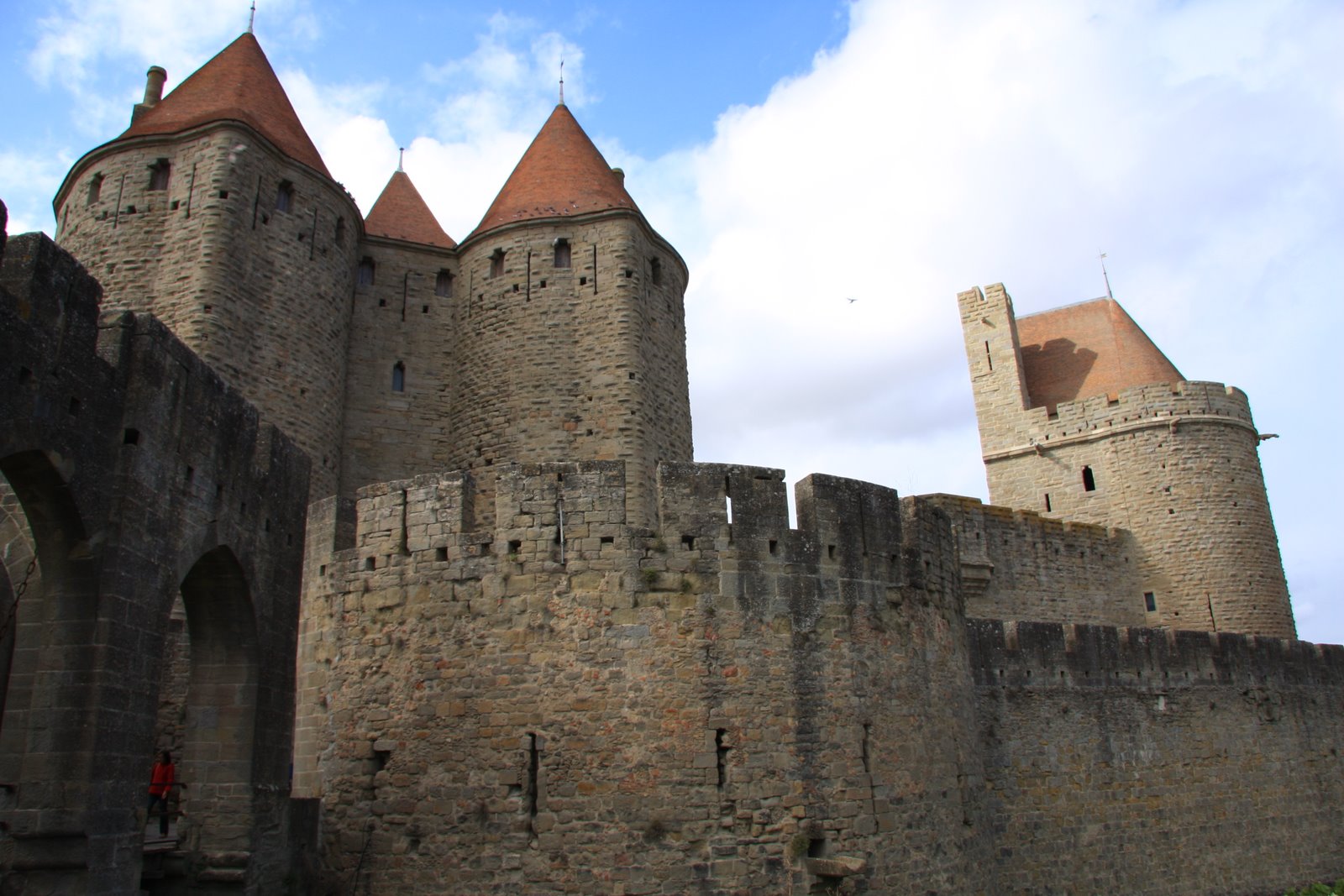
Carcassonne, designated a UNESCO World Heritage Site, is a beautifully restored fortified town, particularly famous as a Cathar stronghold during the Albigensian Crusades.

Visitors here cannot fail to be fascinated by the area's history. In the early 13th century the Catholic Pope launched a crusade against the Cathars. Languedoc was targeted as a Cathar stronghold and local people sought sanctuary in the impregnable hilltop fortresses where they endured many months of siege before succumbing. Many of the "heretics" were killed or burnt at the stake and the surrounding region was devastated. The proud ruins of many of these legendary fortresses, such as Quéribus and Peyrepertuse can be seen to this day, offering visitors an intriguing glimpse back in time as well as striking panoramic views of the surrounding countryside.

Carcasonne was lovingly restored in 1853 and today would not look out of place in a fairytale with its drawbridges and pointed towers. The town is actually divided into 2; the walled, medieval heart of the "Cité" and the commercial "Ville Basse" below. Most visitors head straight for the Cité and their first impressions are the splendid double ramparts surrounding the town, interspersed by 53 towers. Within the walls is the Château Comtal, built in the 12th century as home to the Trencavels, vicomtes of Carcassonne. Today there are guided tours and educational activities as well as a permanent exhibition about the restoration of the Cité.
Nearby, in the Place de l'église, is the Basilica of St-Nazaire. Described as "the jewel of the Cité" the cathedral was founded in the 11th century. Originally built in a Romanesque style, the gargoyles and more recent alterations give the building a more Gothic appearance.

A "petit train" regularly departs from the Porte Narbonnaise to give visitors a tour of the turrets and ramparts. And nearby, just outside the city walls is the Museum of the Middle Ages where visitors can enjoy a scale model of the city as well as interactive exhibits.
Source:ezinearticles

Friday, April 23, 2010

The Atomium, Belgium ***

At first glance, the Atomium looks like a candidate for the World's Largest Roadside Attractions. And why not? It puts the World's Largest Baseball Bat and the World's Largest Bicycles to shame. Yet the city fathers of Brussels would hasten to tell you that, far from being an example of kitsch, the Atomium is a lasting symbol of the 1958 Brussels World's Fair and Belgium's answer to the Eiffel Tower or the Statue of Liberty. 

Tastes obviously differ regarding the aesthetic appeal of a giant molecule. Still, the Atomium is an impressive structure when viewed from close up. It stands 332 feet (102 meters) high and consists of nine spheres of 59 feet (18 m) diameter connected by tubes measuring 94 feet (29 m) in length and 10 feet (3 m) thick.  Escalators connect the spheres, most of which contain science exhibits. An elevator (said to be Europe's fastest) leads to an observation gallery and restaurant in the topmost atom.

Source: europeforvisitors

Wednesday, April 21, 2010

La petite Venice, Colmar ****


If you have been to Colmar...
...from the bridges over the Lauch, beyond Rue St-Jean, there are attractive views of Colmar's "Little Venice", with picturesque old houses and willow-trees lining the river, and the tower of St Martin's church.

Tuesday, April 20, 2010

Padua, Veneto, Italy ****


Padua (Italian: Padova About this sound listen , pronounced [ˈpadova], Latin: Patavium, Venetian: Padoa) is a city and comune in the Veneto, northern Italy. It is the capital of the province of Padua and the economic and communications hub of the area. Padua's population is 212,500 (as of 2008). The city is sometimes included, with Venice (Italian Venezia), in the Padua-Venice Metropolitan Area, having a population of c. 1,600,000.

Padua stands on the Bacchiglione River, 40 km west of Venice and 29 km southeast of Vicenza. The Brenta River, which once ran through the city, still touches the northern districts. Its agricultural setting is the Pianura Veneta. To the city's south west lies the Euganaean Hills, praised by Lucan and Martial, Petrarch, Ugo Foscolo, and Shelley.

The city is picturesque, with a dense network of arcaded streets opening into large communal piazze, and many bridges crossing the various branches of the Bacchiglione, which once surrounded the ancient walls like a moat.  Padua is the setting for most of the action in Shakespeare's The Taming of the Shrew.

Source:Wikipedia

Sunday, April 18, 2010

Strasbourg, Alsace, France *****


Strasbourg (pronounced: [stʁazbuʁ]; Alsatian: Strossburi, [ˈʃd̥rɔːsb̥uri]; German: Straßburg, [ˈʃtʁaːsbʊʁk]) is the capital and principal city of the Alsace region in north-eastern France. Located close to the border with Germany, it is the capital of the Bas-Rhin department. In 2006, the city proper had 272,975 inhabitants and its urban community 467,375 inhabitants. With 638,670 inhabitants in 2006, Strasbourg's metropolitan area ("aire urbaine") (only the part of the metropolitan area on French territory) is the ninth largest in France. The transnational Eurodistrict Strasbourg-Ortenau has a population of 884,988 inhabitants.[5]

Strasbourg is the seat of several European institutions such as the Council of Europe (with its European Court of Human Rights, its European Directorate for the Quality of Medicines and its European Audiovisual Observatory) and the Eurocorps as well as the European Parliament and the European Ombudsman of the European Union. Strasbourg is an important centre of manufacturing and engineering, as well as of road, rail, and river communications. The port of Strasbourg is the second largest on the Rhine after Duisburg, Germany.[6] The city is the seat of the Central Commission for Navigation on the Rhine.

Strasbourg's historic city centre, the Grande Île ("Grand Island"), was classified a World Heritage site by UNESCO in 1988, the first time such an honor was placed on an entire city centre. Strasbourg is fused into the Franco-German culture and although violently disputed throughout history, has been a bridge of unity between France and Germany for centuries, especially through the University of Strasbourg, currently the largest in France, and the co-existence of Catholic and Protestant culture.
Source: Wikipedia